


“Just hear those sleigh bells ring-a-ling, ting-ting-ting-a-ling too,
Come on, it’s lovely weather for a sleigh ride together with you …”
— Popular Christmas song
Across today’s Ohio country, we hate snow. Yes, really. We spend our tax dollars lavishly to equip our cities, towns, and villages with all the ammunition they need to combat the white menace that falls from the sky. Those arsenals include snowplows, salt spreaders which disperse hundreds of tons of rock salt on our highways and byways, high-tech snow melters, a plethora of additives to banish snow more efficiently and on and on.
Most residents today have at least a snow shovel to rid sidewalks and driveways of the white stuff, and more and more people have snowblowers in their garages, parked next to burgeoning bags of various snow-fighting products.
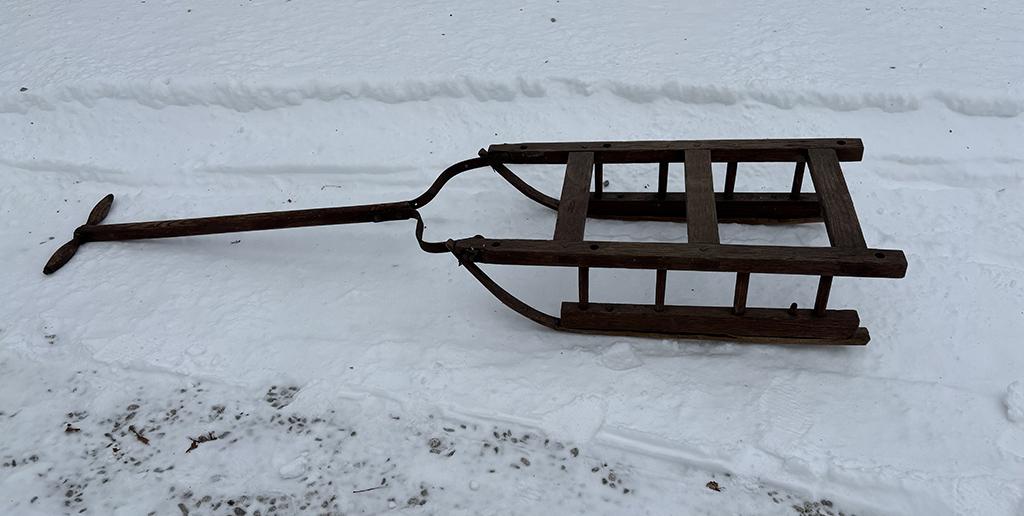
It wasn’t always like this. In pioneer days, settlers actually looked forward to winter. It was a time for sleighing, and a time when farm chores could be done using various types of sleds and sledges to more easily accomplish tasks that were difficult in warmer weather.
In the 1800s, people relished major snowfalls and actually worked hard to keep the snow on the roads. Many towns owned snow rollers, the purpose of which was to compact the snow onto the roads to facilitate sleighing and the movement of agricultural equipment with runners. These horse-drawn snow rollers sometimes consisted of large, smoothed logs set on axles in heavy frames, while in other examples, the rollers were built by connecting two large wheels together with heavy wooden slats. Such rollers would be driven up and down major thoroughfares to keep the snow packed down tightly.
When this job was done, the sleighs came out in force, and there were many styles ranging from simple work sleighs and bobsleds to fancy, high-style Albany and Portland cutters resplendent with decorative brass fittings and wonderfully artistic paint jobs featuring everything from elaborate striping to eye-catching scenes of exotic places and animals.
Keeping warm
And sleighing required a particular set of accessories, which many settlers made it a priority to acquire. The first of these was a large buggy robe for the obvious purpose of keeping warm. The earliest of these were made from animal hides, with bearskin and buffalo being the covering of choice. Such skins were stitched to a heavy felt or corduroy backing to provide even more insulation. Also required was a pair of heavy animal hide gloves. These were also typically made from bearskin or buffalo — complete with all the hair — stitched onto a thick leather palm.
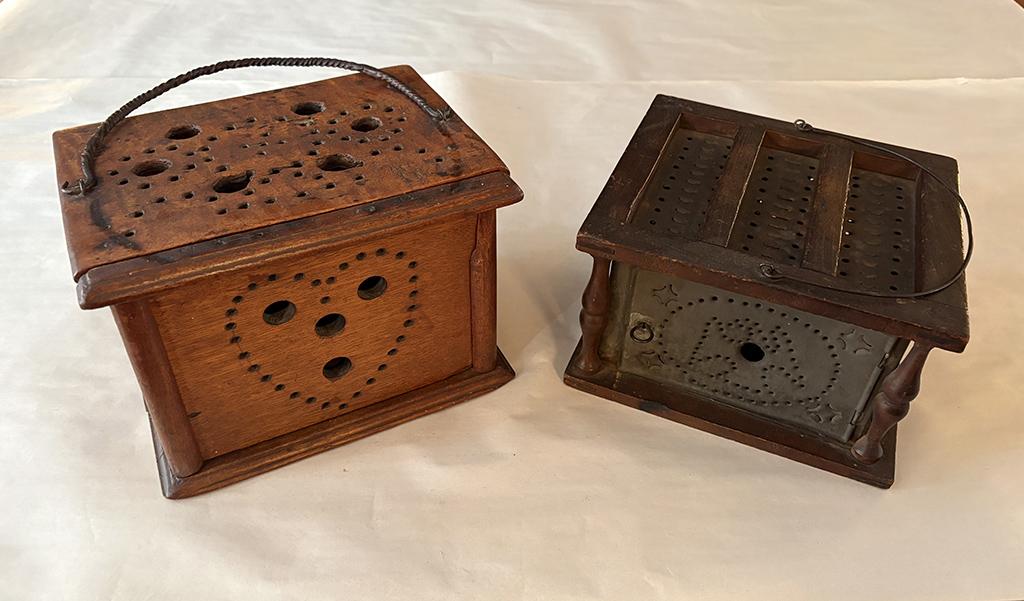
Also used to keep warm were foot warmers. These were products of the tinsmith, cabinetmaker or potter. A popular and especially fashionable type of footwarmer was a joint product of the local tinsmith and cabinetmaker. It consisted of a tin box, set into a wooden framework. The tin box, which was often elaborately decorated by the tinsmith with a variety of folk motifs, contained a sheet iron tray into which hot coals collected from the fireplace or stove were placed. The heat from the coals radiated out through the holes in the top of the box. Popular decorations on these included arrangements of hearts, clovers, diamonds, fylfots and pinwheels.
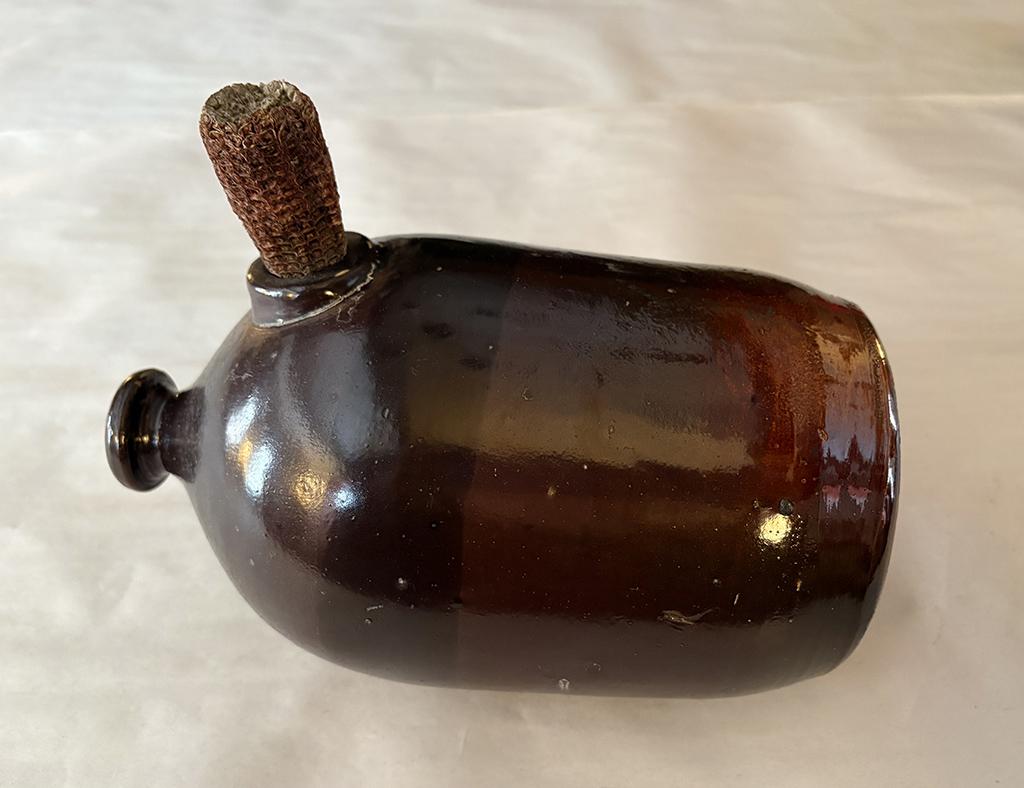
The local potter crafted stoneware foot warmers which could be filled with hot water, held in by a cork or a corncob. Cabinetmakers made wood-cased footwarmers, with the decorative patterns being accomplished with a drill, the resulting holes allowing for heat from the metal, ember-filled tray inside to escape.
Breaking the ice
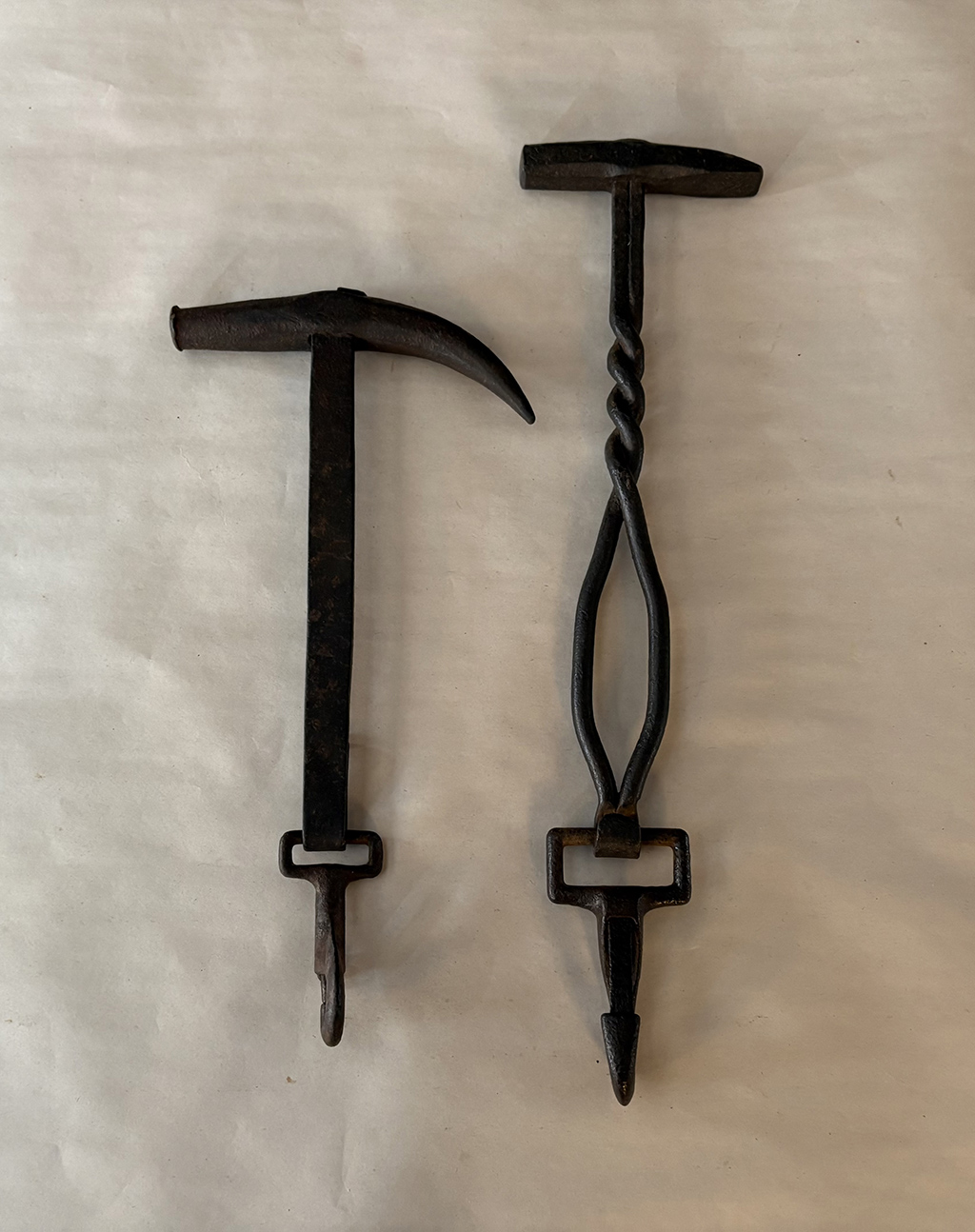
A piece of equipment that was always carried on a sleigh was a snow knocker, or two. These small, blacksmith-made iron hammers were used periodically during a ride to remove frozen snow that built up in a horse’s hoof. A pick on one end of the head was used to pull out chunks of ice, while the hammer was used to tap snow off the hoof. Snow knockers always incorporated a metal clip that allowed them to be fastened to the frame of the sleigh, ready for use.
Of course, no sleigh set-up would be complete without a set of sleigh bells. These were used primarily to alert both pedestrians and other vehicles to one’s approach, which otherwise would be silent. Sleigh bells strings, attached to the horses’ tack, could be as long as several feet and contain dozens of bells of graduated sizes ranging from as small as a marble to as large as a handball. The unique sound made by any particular string of bells could identify the owner of an oncoming sleigh to discerning ears.
Instead of bells, some sleigh drivers carried a sleigh horn. This bellows-like contraption, having a heavy spring inside, sat on the floor of the sleigh and was operated by stepping on it. The foot pressure caused a foghorn-like whistle to sound.
Perhaps the most noteworthy part of the short-lived sleighing culture each winter was the formation of huge caravans of sleighs which made nighttime torchlight forays to neighboring villages where residents would get together for a party, the centerpiece of which was always a big bonfire that allowed riders to warm up. Food and drink were provided by the host town, residents of which expected the hospitality to be reciprocated when their sleigh caravan traveled to the visiting town a couple of nights later.
Sleigh caravans, like barn raisings and various bees, allowed residents of different locales to get to know one another and build a camaraderie that went a long way toward helping settle an area.